



The Energy Behind Everyday Life
A comfortable building makes energy easy to overlook. The lights are on, the rooms are cool, and the equipment works. But could it provide that same comfort with less waste? Think of an empty meeting room that is still being cooled, or lights left on long after everyone has gone home. Small operating decisions like these shape how much energy a building uses every day.
Across homes, offices, schools, and shops, energy keeps daily life running. It powers equipment, heats water, cooks meals, and keeps indoor temperatures comfortable. That energy can come from electricity, gas, or other fuels.
According to UNEP and GlobalABC’s Global Status Report for Buildings and Construction 2025–2026, the buildings and construction sector accounted for 28% of global energy consumption in 2024 (UNEP, 2026). Here, we focus on the energy used to operate buildings and the everyday decisions that shape it.
Why Electricity Matters More Than Ever
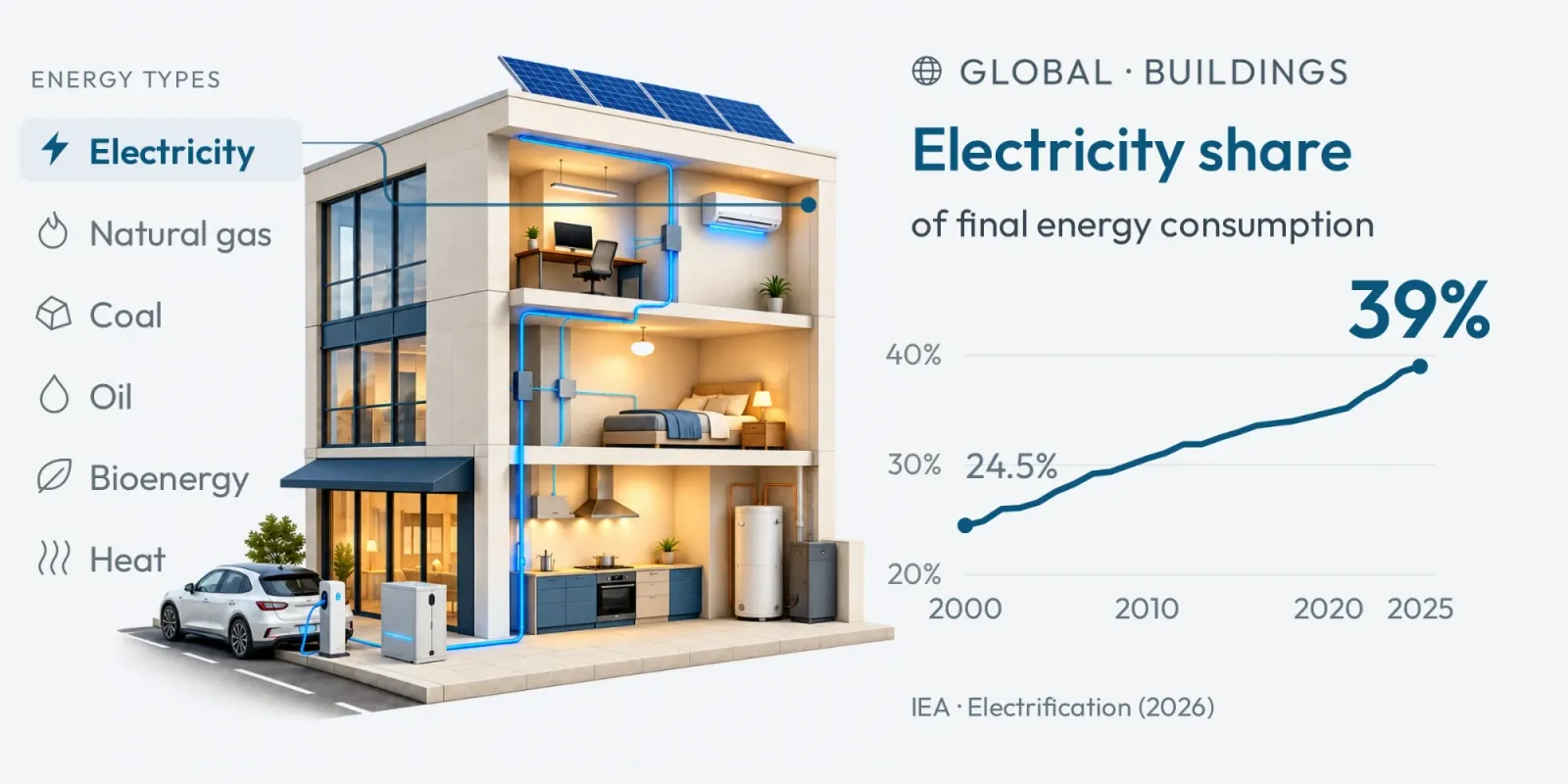
Within the mix of energy that buildings use, electricity is taking on a larger role. One reason is building electrification: replacing fuel-powered equipment with electric alternatives, such as switching from a gas stove to an induction cooktop. Electricity use also grows as buildings rely on more appliances and air conditioning. The International Energy Agency reports that electricity’s share of global building energy consumption rose from around 25% in 2000 to 39% in 2025 (IEA, 2026a).
Buildings are also shaping demand across the wider electricity system. They accounted for nearly 45% of the increase in global electricity demand in 2025, making them the largest contributor to that year’s growth. This increase was supported by appliances, air conditioning, heat pumps, and expanding data center demand in some regions (IEA, 2026b).
As more activities run on electricity, buildings face an increasingly important question: how can we meet people’s needs while making better use of it?
Electricity Use Has a Schedule: From Single Buildings to the Grid
The first opportunity is straightforward: avoid unnecessary use. Turning off equipment in empty rooms and choosing efficient appliances can help reduce consumption.
But the amount we use is only part of the picture.
On a hot afternoon, air conditioners across a city may work hard at the same time. Together, they create a peak in demand that power plants and the grid—the network delivering electricity—must accommodate.
Expanding that infrastructure is part of the solution. Buildings can also help by moving suitable activities to less busy periods. A hot-water system, for example, might heat water earlier and keep it ready for when people need it. Adjusting demand in this way can ease pressure on the electricity system (IEA, 2024).
The source of electricity matters too. Its associated emissions depend on how it is generated, while the availability of wind and solar power changes with weather and time.
Buildings therefore have several goals to consider: reduce waste, manage costs, support the grid, and cut emissions. These goals can reinforce one another, but they do not always lead to the same operating choice. Moving an activity to a cheaper hour, for example, does not necessarily reduce the amount of electricity it uses or its emissions.
Reduce. Shift. Generate. Store.
Buildings have four useful, complementary options:
- Reduce: need less energy to provide the same service. Better insulation, shading, efficient equipment, and appropriate operating schedules can help.
- Shift: move suitable activities to another time while still meeting people’s needs.
- Generate: produce some electricity on-site, such as with rooftop solar panels.
- Store: save energy for later using batteries or thermal storage, such as an insulated hot-water tank.
Each option helps in a different way. Together, they create decisions that need to fit around one another.
Imagine an office building on a sunny afternoon. Its solar panels are producing electricity, rooms still need cooling, and a battery has space available. Should surplus electricity charge the battery? How much stored energy might the building need later?
Installing equipment creates possibilities. Getting value from it also requires deciding how and when to use it.
From Energy Data to Smarter Management Decisions
A Smart Energy Management System (SEMS) helps a building understand and coordinate its energy use. It brings together information from meters and equipment, helping operators identify opportunities and decide what to adjust. Depending on its capabilities, it may recommend changes or automatically control connected equipment.
It can start with the empty meeting room from our opening example. Electricity-use records, equipment status, and occupancy information may reveal that cooling continues unnecessarily. The system can help an operator adjust the schedule and check whether the change saves energy while keeping occupied rooms comfortable.
None of this requires solar panels or a battery.
When those resources are available, there are more choices to coordinate. In our sunny office building, a SEMS could help decide when and how much surplus solar electricity to store. If substantial electricity use is expected after sunset, charging the battery earlier may help meet that demand. If little electricity will be needed later, storing all the surplus may offer less value, particularly because some energy is lost during charging and discharging. The decision depends on expected building needs, available storage, and equipment limits.
The value comes from turning information into action—and checking the result. A dashboard can show where energy goes. Better operating decisions are what help the building improve.
What’s Next? Keep Exploring with E3
At E3 Center, we study how energy decisions connect buildings, transport, and the wider grid, including the coordination of storage and flexible electricity demand.
How can we turn more energy options into better everyday decisions?
Follow E3 Center for upcoming articles exploring the technologies, research, and practical trade-offs behind smarter energy management.
References
- International Energy Agency. (2024). More efficient and flexible buildings are key to clean energy transitions. IEA. https://www.iea.org/commentaries/more-efficient-and-flexible-buildings-are-key-to-clean-energy-transitions
- International Energy Agency. (2026a). Electrification. IEA. https://www.iea.org/reports/electrification
- International Energy Agency. (2026b). Global energy review 2026. IEA. https://www.iea.org/reports/global-energy-review-2026
- United Nations Environment Programme. (2026). Global status report for buildings and construction 2025–2026: As climate risks rise and cities grow, we must rethink how we build to create better lives for all. https://doi.org/10.59117/20.500.11822/49531